Water heater trouble: repair it or replace it?
A water heater usually gives warning before it fails: lukewarm showers, popping noises, rusty hot water, a damp floor around the base. Its age decides most of what comes next.
Last reviewed October 30, 2026 against the sources listed below. General information, not insurance or legal advice.
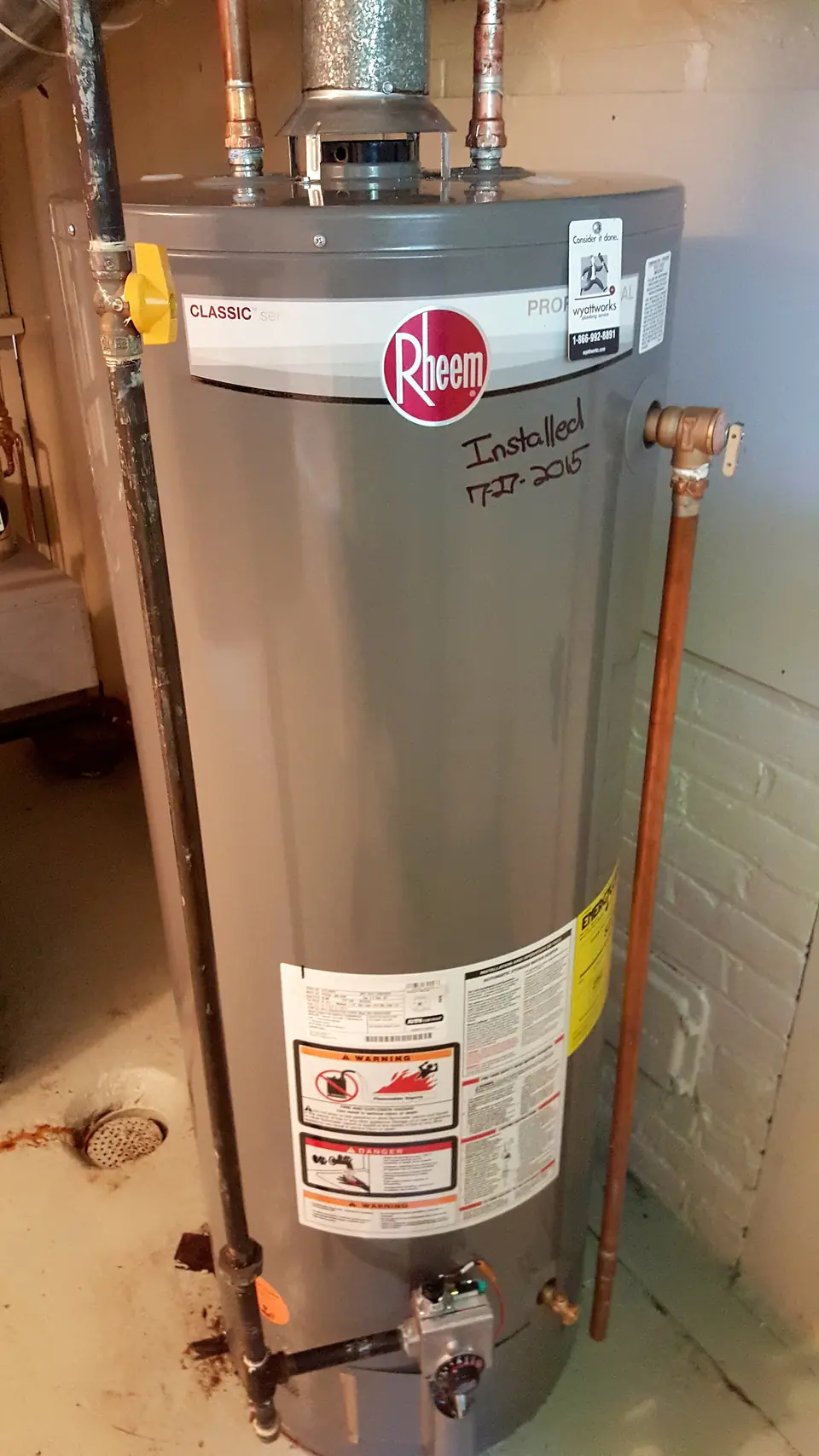
How old is it?
The manufacture date is usually on the label or coded in the serial number. ENERGY STAR suggests that once a water heater is more than 10 years old, it is time to consider replacing it before you are forced into an emergency decision. A Department of Energy Building America guide puts typical tank life at 10 to 15 years and tankless units at up to 20.
Often worth repairing
- Electric, no hot water: a tripped breaker, a failed heating element or thermostat. These parts are replaceable.
- Gas, no hot water: a pilot or ignition problem, or a bad thermocouple or gas valve.
- Relief valve dripping: the temperature and pressure relief valve may be worn, or the pressure in the house may be too high. Have it checked; never cap or plug it.
- Rumbling or popping: sediment on the bottom of the tank. Flushing can help on a younger heater.
Usually time to replace
- Water leaking from the tank itself, not a fitting. A rusted-through tank cannot be patched.
- Rusty water from the hot side only, on an older heater. The City of Newberry notes that discolored hot water can come from rust in the tank and suggests flushing it per the manufacturer; if flushing does not clear it on an old tank, the lining may be failing.
- Repeated repairs on a heater past its expected life.
Tank or tankless?
A tank stores 40 to 50 gallons or more and costs less to buy. A tankless unit heats water as it flows, so it does not run out, but it has to be sized for how many showers and appliances run at once, and gas models may need a larger gas line and new venting. Ask the plumber to size it for your household, not just to match the old one.
Set it to 120°F
The Consumer Product Safety Commission urges setting water heaters to 120°F to prevent scald burns, which mostly injure young children and older adults; at 140°F a burn takes about six seconds.
Permits
Replacing a water heater usually needs a permit. In unincorporated Newberry County, the county building department issues it; inside the City of Newberry or a town, ask the city or town. A licensed plumber should pull it.
If the tank is leaking now, shut off the cold supply and the power or gas: water heater leak steps.
Frequently asked questions
How long does a water heater last?
A tank water heater typically lasts 10 to 15 years and a tankless unit up to about 20, according to a Department of Energy Building America guide. ENERGY STAR suggests planning a replacement after 10 years.
What temperature should my water heater be set to?
The Consumer Product Safety Commission recommends 120°F to reduce the risk of scald burns.
Policies vary. Check your own policy and ask your insurer or agent about anything that affects your claim. Rules can change; this page reflects the sources below as of October 30, 2026. NewberrySCPlumbing.com is not a plumber, insurer, adjuster or law firm.
Find local help
Plumbers and well contractors serving Newberry County · Ask for help with a frozen or burst pipe · Who to call · Counties and towns
Sources
- ENERGY STAR: When should you replace your water heater?
- U.S. DOE Building America: Measure guideline, transitioning to a tankless water heater (OSTI)
- U.S. Consumer Product Safety Commission: Avoiding tap water scalds (PDF)
- City of Newberry Utilities: FAQs (water main vs service line, discolored water, emergency numbers)
- Newberry County Building Inspection