Water heaters: freezes, leaks and what insurance pays for
A water heater in a garage, crawl space or outside closet sits where pipes freeze first. And a cold snap, when an old tank is working its hardest, is when many give out.
Last reviewed October 30, 2026 against the sources listed below. General information, not insurance or legal advice.
Freeze risks by type
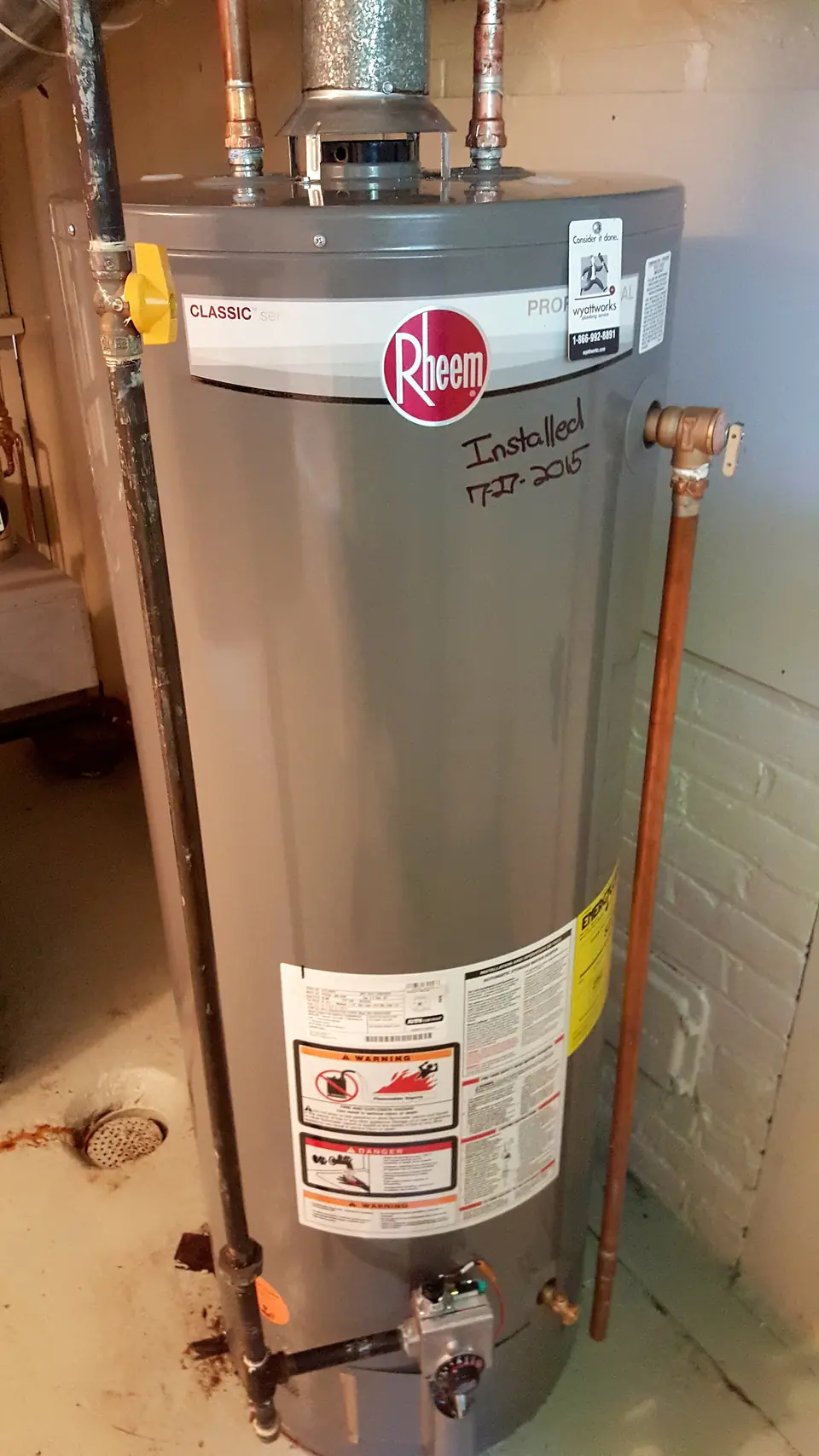
- Tank heaters in garages or outside closets: the tank holds heat, but the cold and hot lines above it, the drain valve and the relief valve line are exposed. Insulate the pipes and keep the garage door closed, as the American Red Cross advises for any garage with water lines.
- Tankless heaters: many have built-in freeze protection that needs electricity. If the power goes out in a hard freeze, follow the maker's instructions for draining the unit. Outdoor-mounted units are the most exposed.
- Gas heaters during a power outage: a standard tank heater with a standing pilot may keep working, but power-vented and electronic-ignition models need electricity.
If a water heater leaks
- Turn off the power at the breaker (electric), or set the gas control to "off" or "pilot" (gas).
- Close the cold-water valve on the line into the heater.
- Find the source. Water at the top may be a loose fitting; water from the relief valve may be a pressure or temperature problem; water from the tank itself means the tank has failed and must be replaced.
- To drain it, connect a hose to the drain valve, run it outside or to a floor drain, and open a hot faucet in the house to let air in. The water can be scalding.
Insurance
Policies usually cover the water damage from a sudden tank failure but not the worn-out heater itself. A slow leak that rotted the floor over months is usually excluded. Photograph the tank's label, which shows when it was made.
After a freeze or an outage
- Do not turn power back on to an electric heater until the tank is full of water, or the elements can burn out.
- Relight a gas pilot only by following the instructions on the heater. If you smell gas, leave and call the gas utility from outside.
- If the cold line split above the heater, close the cold valve and call a plumber. Replacing a water heater or adding a gas line typically needs a permit; in unincorporated Newberry County, the county building department issues them.
The small tank on the cold line
Many newer homes have an expansion tank on the cold line by the heater. It absorbs the pressure that builds as water heats. If it is waterlogged, the relief valve may drip; a plumber can check it.
Frequently asked questions
Can a water heater freeze?
The tank rarely freezes while it is working, but the pipes and valves around it can, especially in a garage, crawl space or outside closet. Tankless units can freeze if they lose power.
Is a leaking water heater covered by insurance?
Usually the sudden water damage is covered, not the heater itself. Slow leaks are usually excluded.
Policies vary. Check your own policy and ask your insurer or agent about anything that affects your claim. Rules can change; this page reflects the sources below as of October 30, 2026. NewberrySCPlumbing.com is not a plumber, insurer, adjuster or law firm.
Find local help
Plumbers and well contractors serving Newberry County · Ask for help with a frozen or burst pipe · Who to call · Counties and towns
Sources
- American Red Cross: Frozen pipes
- IBHS / International Code Council: Freezing and bursting pipes (the 20°F temperature alert threshold)
- SC Department of Insurance: Homeowners insurance FAQ
- Insurance Information Institute: Surviving severe cold weather
- Ready.gov: Power outages
- Newberry County Building Inspection